When you see before and after photos of anti-wrinkle injections, the first thing you'll probably notice is just how significant, yet natural, the results are. These pictures really highlight how treatments can soften dynamic lines like crow's feet and forehead wrinkles without completely erasing your facial expressions. The goal is to leave you looking refreshed and well-rested, and you'll typically see the most noticeable changes kick in around two weeks after your appointment.
Your Visual Guide to Anti-Wrinkle Injection Results
Seeing is believing, especially when it comes to aesthetic treatments. There's no better way to understand the real impact of anti-wrinkle injections than by looking at photos of actual patients who have been through the process. This kind of visual evidence gives you a clear and honest picture of what’s achievable.
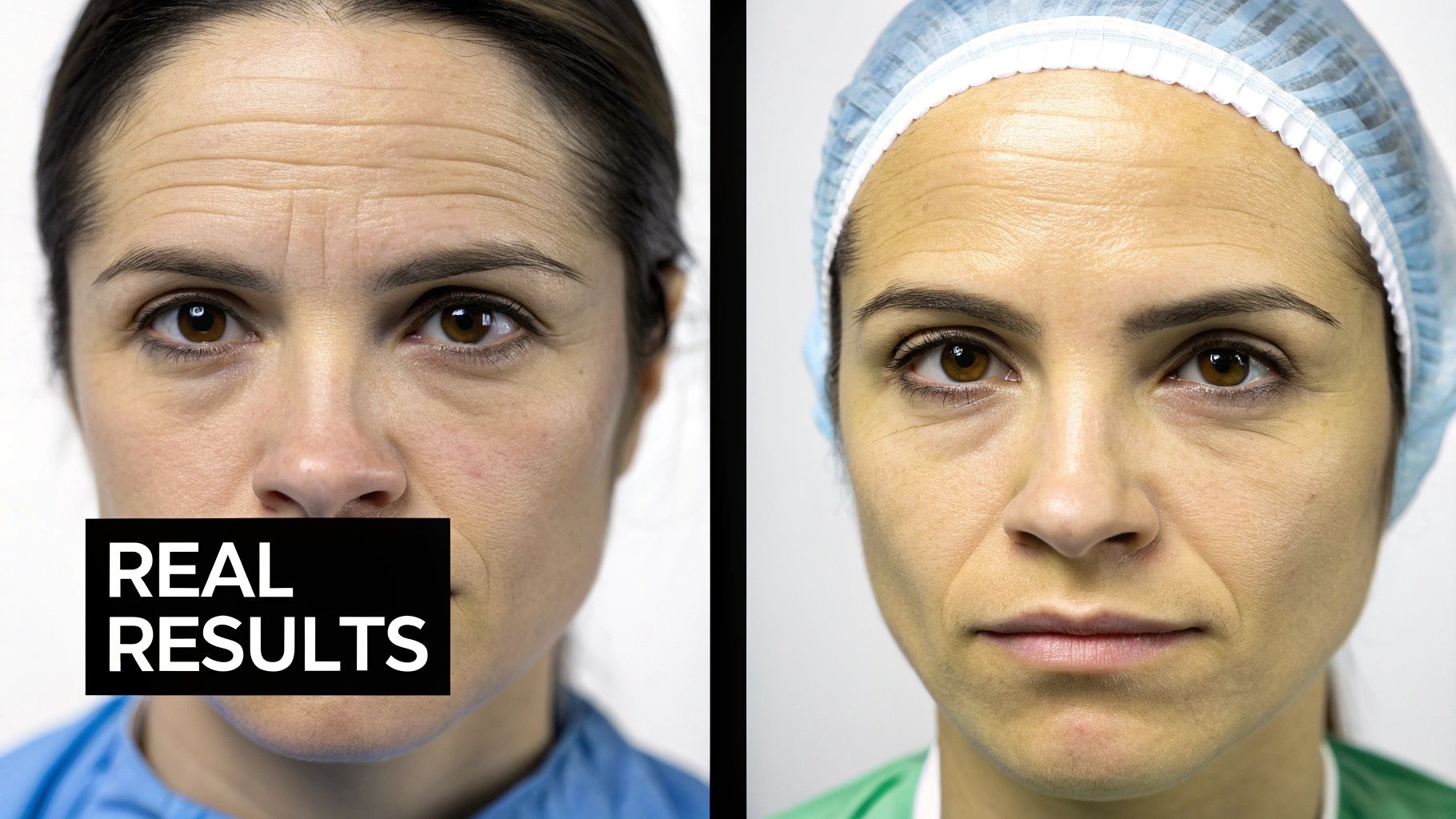
It helps to think of this treatment not as a way to freeze your face, but more like a tool to gently relax the lines that have formed from years of repetitive muscle movements. The main aim is a more relaxed and rejuvenated appearance, letting you express yourself freely without deepening those expression lines.
Setting Realistic Expectations
While the images are definitely compelling, it's so important to have realistic expectations. Everyone's results are unique to them. The subtle but powerful transformations you see in these photos usually address common concerns that lots of people share, including:
- Forehead Lines: Those horizontal creases that show up when you raise your eyebrows.
- Frown Lines (Glabellar Lines): The vertical "11s" that can appear between your brows from frowning or concentrating.
- Crow’s Feet (Periorbital Lines): The fine lines that fan out from the corners of your eyes when you smile or squint.
To give you a clearer idea of what to expect in specific areas, here’s a quick breakdown.
At-a-Glance Guide to Treatment Results
| Treatment Area | Common Concern (Before) | Typical Result (After) | Results Emerge In |
|---|---|---|---|
| Forehead | Horizontal lines from raising eyebrows | A smoother, less creased forehead | 5-14 days |
| Frown Lines | Deep vertical "11s" between the brows | A softer, less "angry" or worried look | 3-10 days |
| Crow's Feet | Fine lines fanning out from the eyes | Lines are visibly softened when smiling | 7-14 days |
This table is just a guide, of course, but it helps frame what the journey from "before" to "after" often looks like.
A successful treatment is one where you look like a rested, refreshed version of yourself—not like someone else. The goal is to smooth, not to immobilise, keeping the natural character of your face intact.
By looking closely at anti wrinkle injections before and after photos, you can start to build a solid idea of what to expect. It's the best way to answer that big question—"What will I look like afterwards?"—and gets you ready to understand the science behind these amazing results. Here at Roop Aesthetic Clinic, our entire process is built around enhancing your natural beauty with precision and care.
When you see those incredible "anti wrinkle injections before and after" photos, you're not looking at magic. You're seeing elegant science at work. The smooth, relaxed skin that looks so refreshed is the result of a precise medical treatment that gets right to the source of expression lines.
So, how does it actually happen?
Anti-wrinkle injections use a highly purified protein that acts like a specific messenger in your facial muscles. The simplest way to think about it is as a dimmer switch for the tiny, overactive muscles that cause wrinkles.
Every single time you frown, squint into the sun, or raise your eyebrows in surprise, certain facial muscles contract, folding the skin on top of them. Do that thousands upon thousands of times, and those temporary creases start to stick around, becoming permanent wrinkles. These injections work by temporarily blocking the nerve signals that tell those specific muscles to contract so hard.
Targeting Dynamic Wrinkles with Precision
This targeted approach is what makes the treatment so effective. It allows the skin above the muscle to finally rest and smooth out, a bit like ironing the creases out of a linen shirt. The treatment is designed specifically for dynamic wrinkles—the lines formed by your expressions.
This includes common areas of concern like:
- The vertical "11s" that form between your brows when you frown.
- The horizontal lines that run across your forehead.
- The fine "crow's feet" that appear at the corners of your eyes when you smile.
By precisely targeting only these small, specific muscles, all your other facial muscles carry on as normal. This is crucial because it ensures you can still show emotion and express yourself naturally. It’s all about softening lines, not erasing your personality.
The Science of Relaxation
The active ingredient, botulinum toxin, works right where the nerve meets the muscle. It gently interrupts the release of a chemical called acetylcholine, which is the neurotransmitter that tells a muscle to contract.
The goal here is controlled moderation. By gently dialling down the intensity of these muscle movements, the skin gets a much-needed break. This allows it to repair and smooth itself out, creating the subtle yet significant results you see in our before and after photos.
It's no surprise this treatment is so popular, with around 900,000 procedures performed each year in the UK. The vast majority of patients—81%—are looking to reduce the visible signs of ageing.
But safety has to be the top priority. It is absolutely essential that your treatment is administered by a qualified medical professional. Shockingly, some studies have shown that less than half of patients confirmed a qualified prescriber was even present during their consultation, which really highlights the need to do your homework. You can explore more about these safety insights and what you should always look for in a practitioner.
Here at Roop Aesthetic Clinic, our practitioners have a deep, practical understanding of facial anatomy. This expertise is what allows us to deliver beautifully natural and refreshed results, every single time.
The Complete Treatment Timeline: From Day 1 to Month 4
One of the most common questions I get asked is, "When will I see my results?" It's a great question, and the answer is that the magic doesn't happen overnight. Instead, your results unfold gradually, revealing smoother, more refreshed-looking skin over a couple of weeks.
Think of it like this: the treatment is planting a seed. You won't see a fully bloomed flower the next day, but with a little bit of patience, you'll witness a beautiful change. This timeline will walk you through exactly what to expect from the moment you leave Roop Aesthetic Clinic.
This diagram gives you a simple visual of how the process works – moving from active frown lines to beautifully relaxed and smoother skin.
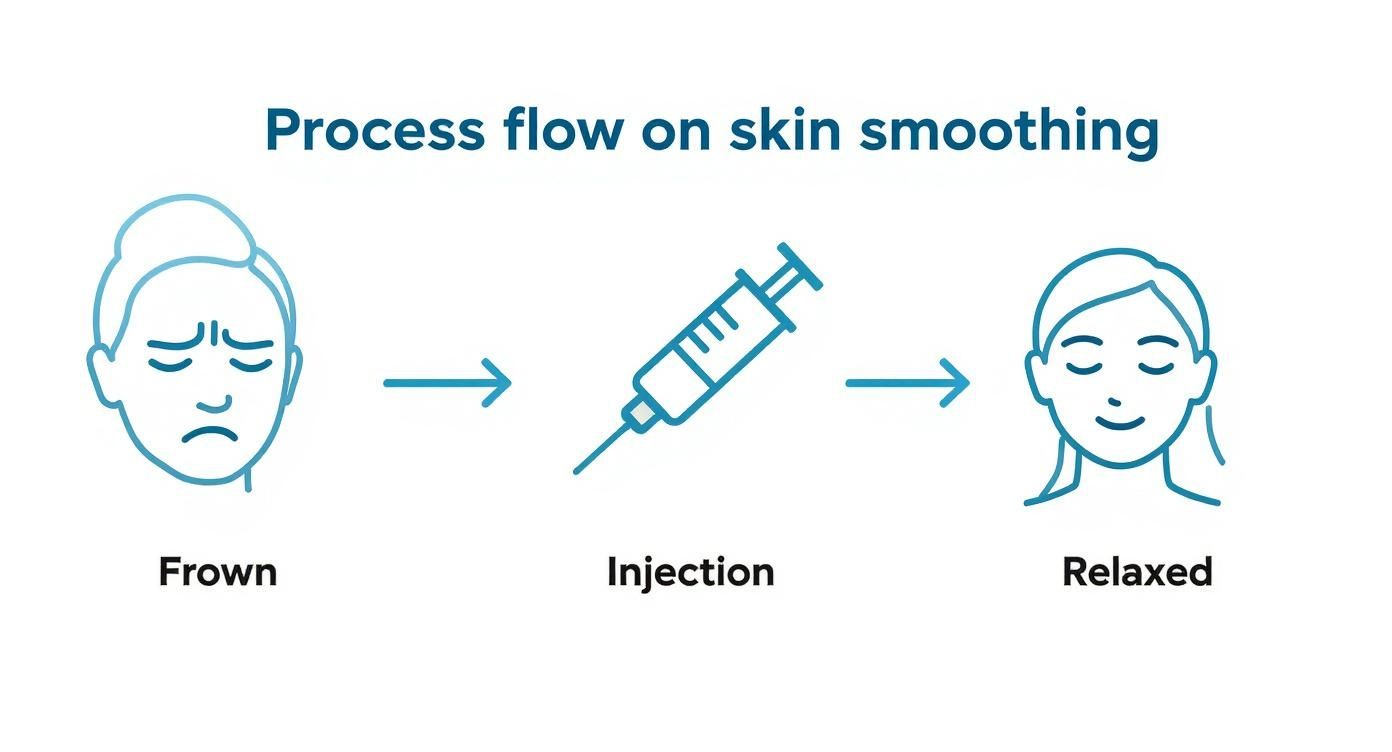
It's a straightforward process: the injections gently relax the underlying muscle, allowing the skin on top to smooth out. Simple, but incredibly effective.
The First Few Days
Right after your appointment, you might notice a few tiny red dots where the injections were made. Don't worry, these usually disappear within an hour or so. For the first 24 to 48 hours, the product is just beginning to settle in. It’s really important to follow the aftercare advice I give you, like avoiding any strenuous exercise during this time.
Around day three to five is when things start to get exciting. You’ll likely notice the very first signs of change as the targeted muscles begin to relax. Those dynamic lines, like the ones that appear on your forehead when you raise your eyebrows, will start to look a bit softer.
Reaching Peak Results
The real "wow" moment usually happens around the two-week mark. By day 14, the product has fully taken effect, and your results will be at their peak. This is when the "after" in your before-and-after photos truly comes to life.
At this point, your skin will look noticeably smoother and rested. Lines will be significantly softened, revealing a rejuvenated and more relaxed version of yourself. This is the perfect time for us to have a follow-up to assess your results and ensure you're delighted.
Your Results Timeline: What to Expect and When
Here’s a quick-glance table breaking down the journey of your anti-wrinkle treatment results. It helps to know what’s happening and when, so you can just relax and enjoy the process.
| Timeframe | What You Might See or Feel | Key Milestones |
|---|---|---|
| Day 1 | Minor redness or tiny bumps at injection sites, which fade quickly. | Treatment is complete, aftercare begins. |
| Day 3–5 | The first subtle signs of muscle relaxation. Dynamic lines start to soften. | The "it's starting to work!" moment. |
| Day 7 | A noticeable reduction in muscle movement and line appearance. | Results are becoming much more visible. |
| Day 14 | The product is fully settled. Skin appears smooth and refreshed. | Peak results are achieved. Time for a follow-up. |
| Month 3–4 | Muscle activity gradually begins to return as the effect wears off. | Time to think about your next appointment. |
This timeline is a great guide, but remember that everyone's body responds a little differently. The main takeaway is that your best results take about two weeks to fully appear.
Maintaining Your Look
Those beautifully smooth results typically last for about three to four months. Of course, this can vary a bit based on things like your metabolism and which area we’ve treated. For example, injections into larger, stronger muscles might have a slightly different timeline; our guide explains how long treatment can last in the masseter muscle and what influences it.
As the months go by, you'll notice the effects gradually fade and muscle movement slowly returns to normal. This is your cue to book in for your next appointment to maintain that fresh, smooth look. Sticking to a consistent treatment schedule is the best way to keep those lines at bay and even help prevent deeper ones from forming in the first place.
Essential Pre-Treatment and Aftercare Steps
Getting fantastic anti-wrinkle injection before and after results is a real partnership between you and your practitioner. How you prepare for your appointment and look after yourself afterwards is just as important as the treatment itself.
Think of these steps as protecting your investment. They're simple, but they make all the difference in ensuring a smooth recovery and beautiful, lasting results.

It’s a bit like preparing a canvas before painting. A clean, well-prepped surface lets the artist do their best work. Taking a few easy steps beforehand helps minimise side effects like bruising and gives the treatment the best possible start.
How to Prepare for Your Appointment
Preparing for your treatment is straightforward. The main goal is simple: reduce the chances of bruising. For about a week before your appointment, it’s a good idea to steer clear of certain medications and supplements known to thin the blood.
Key things to pause taking include:
- Anti-inflammatory medications like Ibuprofen and Aspirin.
- Supplements such as high-dose Vitamin E, fish oil, and St. John's Wort.
- Alcohol for at least 24 hours before you come in, as it can also make bruising more likely.
Following this advice creates the perfect conditions for a comfortable treatment with minimal downtime. For a more detailed look, you can dive deeper into safety, preparation, and aftercare for botox treatments in our complete guide.
Your Aftercare Checklist: The Dos and Don'ts
Once your treatment is done, the focus shifts to letting the product settle in perfectly. Your aftercare instructions are all designed to stop the product from moving away from the specific muscles we’ve targeted. This is absolutely crucial for getting those precise, natural-looking results everyone wants.
For the first 4-6 hours after your treatment, the golden rule is to stay upright. That means no lying down, napping, or bending over excessively. This simple step helps ensure the product stays exactly where I’ve placed it to work its magic.
After those first few hours, there are a few more guidelines for the next 24-48 hours that will help lock in your results:
- Don’t Rub or Massage: Avoid putting any pressure on the treated areas. This includes skipping facials, facial massages, or even wearing tight hats or headbands that press on your forehead.
- Avoid Strenuous Exercise: Keep your heart rate down for a day or two. Intense physical activity increases blood flow to the face, which could potentially cause the product to spread. A gentle walk is fine, but save the spin class for later.
- Steer Clear of Extreme Heat: Saunas, steam rooms, and very hot showers are off-limits for a couple of days. Heat can increase swelling and might interfere with how the product settles.
Following these practical steps is the best way to support your treatment, minimise any side effects, and get ready to enjoy your beautifully refreshed appearance.
Key Factors That Influence Your Final Results
Ever browsed through anti wrinkle injections before and after photos and wondered why the results can look so different from person to person? It’s because these treatments are a highly personalised medical art, not some one-size-fits-all solution. Your unique facial anatomy, muscle patterns, and even your lifestyle play a massive role in shaping the final look.
Several personal factors dictate how your body will respond to the treatment and what dosage is needed to get that smooth, refreshed appearance you’re after. A skilled practitioner doesn't just inject; they assess all these elements during your consultation to create a plan that’s genuinely bespoke to you.
Your Unique Biological Makeup
The biggest influences on your results are completely unique to you. These are the biological factors that make your face your face and determine how it will react to anti-wrinkle treatments.
Here’s what we look at:
- Muscle Strength: If you have particularly strong facial muscles—like the ones that create deep frown lines between the brows—you’ll likely need a higher dose to achieve that ideal muscle relaxation and smoothing effect.
- Age and Skin Elasticity: Younger skin naturally has more bounce-back. Once the muscle beneath is relaxed, it smooths out beautifully. Older skin, on the other hand, might have more 'static' lines etched in over time. These will soften significantly, but may not disappear completely.
- Metabolism: Just like with anything else, your body's metabolic rate affects how quickly it breaks down the product. This is a key factor in how long your results will last.
The Practitioner’s Expertise and Technique
Beyond your own biology, the single most critical factor is the skill of your practitioner. An expert’s deep understanding of facial anatomy is what separates a beautifully natural result from an unnatural, "frozen" look. It’s all about their ability to precisely target the right muscles with the exact right dose. That’s the art.
This expertise is more important than ever. The UK facial injectable market is growing fast, with botulinum toxin type A treatments making up over 55% of the market's revenue. This boom is driven by people wanting minimally invasive procedures for both preventative and restorative reasons. You can learn more about facial injectable market trends and see why choosing a qualified, experienced clinic is absolutely essential.
A successful outcome is a collaboration. It combines your unique facial structure with a practitioner's medical artistry. The goal is always to enhance your natural beauty, not alter it.
Your lifestyle plays a supporting role, too. Things like consistently using a broad-spectrum SPF and sticking to a good skincare routine will help protect your results from sun damage. And of course, aftercare is non-negotiable; following our guidance ensures the product settles correctly for the best possible outcome. You can dive deeper into this with our guide on why anti-wrinkle injection aftercare matters.
Of course. Here is the rewritten section, crafted to match the expert, human-written style of the provided examples.
Your Anti-Wrinkle Injection Questions, Answered
Thinking about anti-wrinkle injections? It’s completely normal to have a few questions before you take the plunge. To help you feel confident and prepared, here are some of the most common things we chat about with our patients at Roop Aesthetic Clinic.
One of the biggest fears we hear is, "Will I look frozen?" The answer is a definite no—not with a skilled practitioner. The goal of anti-wrinkle injections is never to paralyse your facial muscles. It’s all about gently softening lines by relaxing specific muscles, giving you a smoother, more refreshed look while still letting you express yourself naturally.
And what about the actual injections? Most people say it feels like a tiny, quick pinch, much like a mosquito bite. We use incredibly fine needles, and the whole procedure is over in about 15 to 30 minutes.
How Long Will My Results Last?
This is a key question, as it helps you plan your aesthetic journey. While every person’s body metabolises the product a bit differently, you can typically expect your beautifully smooth results to last for three to four months.
You'll know it's time for a top-up when you start to see gentle movement returning to the treated areas. This is the perfect signal to book a maintenance appointment and keep your skin looking consistently refreshed.
How Much Do Anti-Wrinkle Injections Cost?
In the UK, the price of anti-wrinkle injections is based on the area being treated or the number of "units" needed, not just the syringe. This is because your treatment plan should be completely customised to your unique facial anatomy and goals.
For instance, stronger muscles, like the ones that cause frown lines, will likely need more units than the finer muscles around the eyes that create crow's feet. During your consultation, we'll give you a clear, transparent breakdown of the costs based on what you want to achieve.
Remember, this is a medical procedure. Your investment covers far more than just the product. It includes the practitioner’s deep anatomical knowledge, extensive training, and artistic eye—all crucial for achieving safe, beautiful, and natural-looking results.
It’s no secret that aesthetic treatments are popular, with an estimated 7.7 million people in the UK having them. But being well-informed is everything. Shockingly, some reports show that around 18% of patients weren't properly informed about potential risks or complications. At our clinic, we make detailed consultations and clear consent a top priority so you feel completely safe and in control. You can discover more insights on aesthetic treatment safety to understand why this matters so much.
Ready to see what a personalised treatment plan could do for you? The expert team at Roop Aesthetic Clinic is here to create natural, refreshed results that make you feel like the best version of yourself. Book your consultation today and start your journey towards smoother, more radiant skin.
Article created using Outrank